
Vulnerabilidade e Pastéis de Óleo
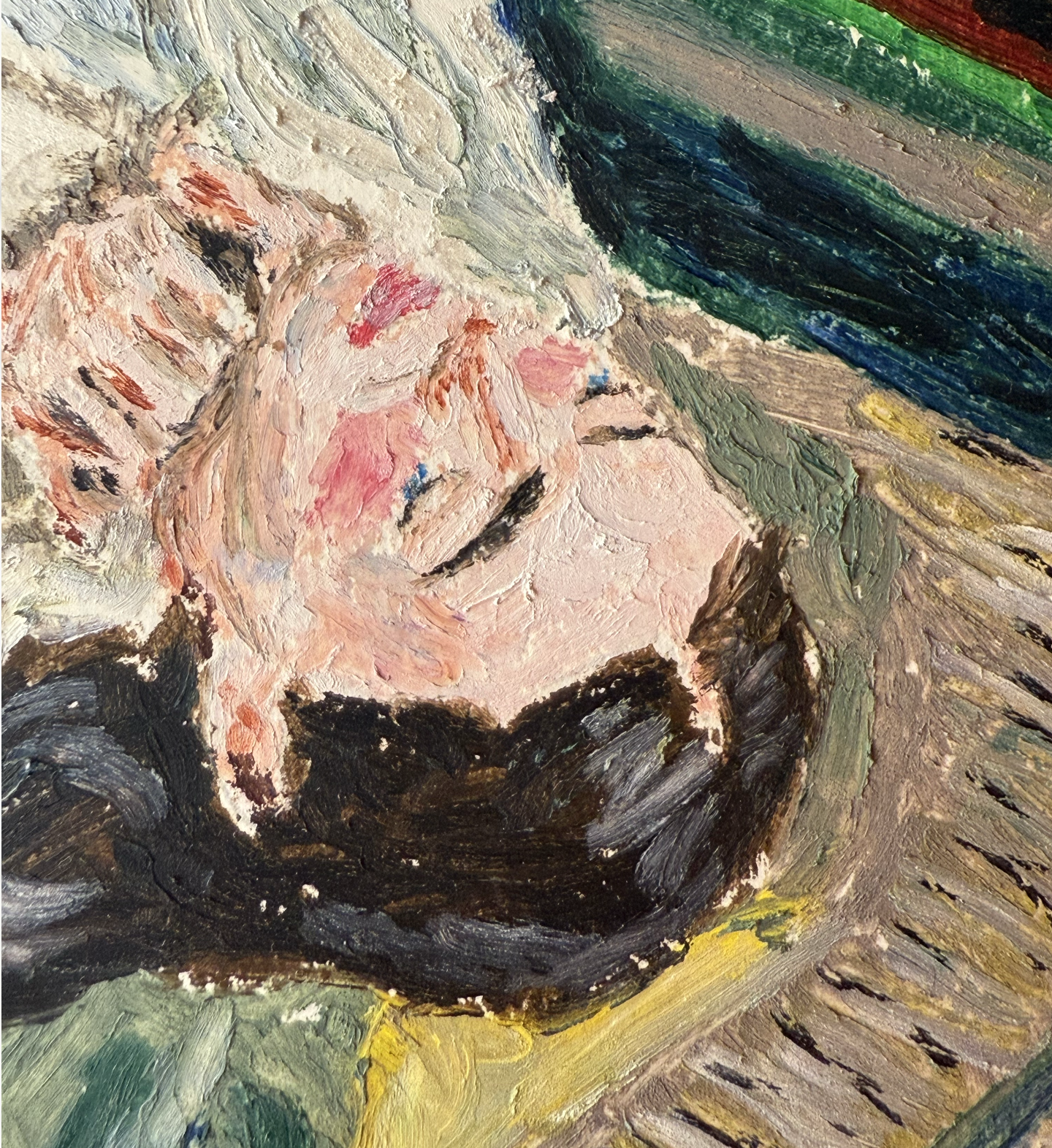
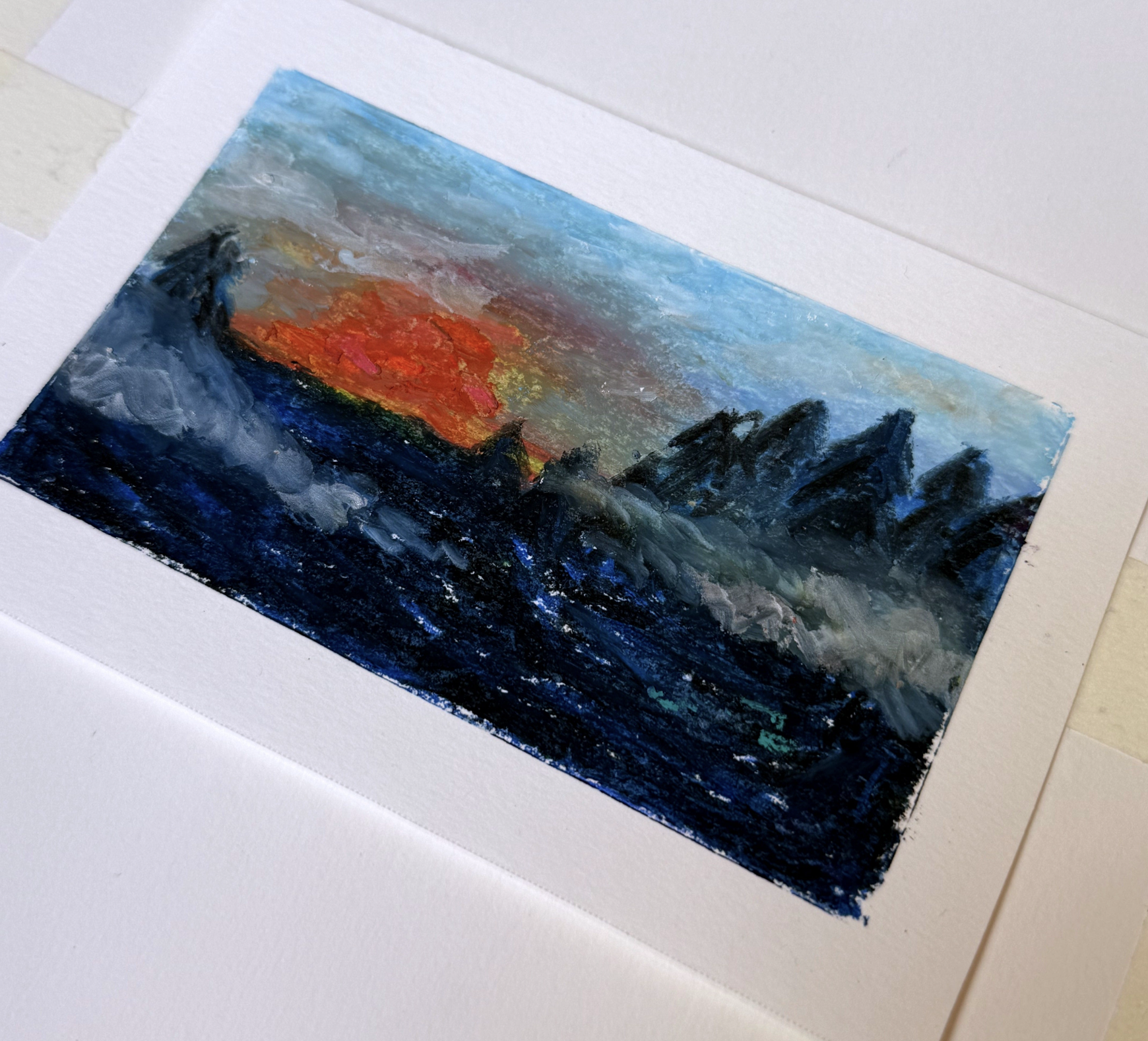
Estudo baseado num still de Poor Things, de Yorgos Lanthimos
Study of a still from Poor Things (Yorgos Lanthimos)
English version available bellow.
Sair da zona de conforto desenvolve a capacidade de adaptação e resiliência, normaliza o erro e ajuda o cérebro a evoluir e a superar-se, revelando-se, porém, tão benéfica quanto morosa e difícil.
As minhas ansiedades e idiossincrasias conferem-me reservas desmedidas quanto a expor-me a novas experiências e, durante muitos anos, mostrar vulnerabilidade e aceitar erros não foram opções viáveis para mim. Este é um dos aspectos da minha personalidade que mais me esforço por alterar, pela sua natureza castradora e, por vezes, incapacitante.
Ao longo dos anos, apaguei a memória da alegria que ser aprendiz em algo pode trazer. Começar um hobby, ler sobre ele, recolher e analisar informação, falhar ao aplicá-la e começar de novo são sensações boas e imprescindíveis à evolução. É bom falhar. É saudável perceber onde precisamos de crescer, de evoluir. Faz parte da vida.
O ego — apesar de parte fundamental da nossa existência — tem a habilidade de construir uma muralha entre a ideia que projectamos de nós mesmos e a pessoa que realmente somos. É extremamente difícil (sobretudo aos olhos de uma sociedade perfeccionista e dedicada à produção em massa) aceitarmo-nos e amarmo-nos como somos — isto é, quando sabemos quem somos. Começamos a vida a aprender o que não fazer, o que é aceitável, o que se espera de nós, como preencher o molde e qual a forma mais ergonómica de castrar a nossa personalidade para nos moldarmos ao que a sociedade, os nossos amigos, os nossos professores, a nossa família (e, agora, as redes sociais e o nosso público imaginário) esperam de nós.
O resultado é a aniquilação da personalidade e biliões de seres humanos a viver em piloto automático. As redes sociais (entre outros factores) apagam qualquer réstia de individualidade e transformam-na em necessidade de padronização, raiva do outro (e de nós mesmos), main character syndrome ou apatia. Assistimos, actualmente, à produção em massa de seres acéfalos que se contentam em gerar (ou consumir, ou ambos) conteúdo absolutamente desprovido de substância para atingir um maior número de double taps — vulgo, validação.
Contra mim falo. Pertenço a uma geração que cresceu com o boom tecnológico e a Indústria 4.0, que nasceu num mundo pré-democratização da internet e acompanhou a sua explosão. O meu primeiro contacto com redes sociais deu-se na puberdade, com o (praticamente) extinto Myspace, ao qual tinha de aceder a partir de um computador pré-histórico que pertencia a toda a família e onde, antes disso, me entretinha a desenhar no Paint. Seguiram-se o MSN, o Hi5 — cujo Top vitimou inúmeras amizades — e os primeiros passos do Facebook. Só aos vinte e um anos tive o meu primeiro smartphone e wi-fi em casa.
Durante os meus (felizmente) idos anos de ansiedade inibidora, usei o Instagram como antídoto ao silêncio e aos pensamentos ruminantes, mas, desde 2020, uso-o apenas como ferramenta de trabalho — embora até isso considere deixar de fazer. No fim de 2025, decidi transformar o meu contacto profissional e relativamente assíduo com o Instagram em consultas esporádicas para responder a mensagens, publicar o ocasional trabalho e nada mais. O meu telemóvel foi expulso do quarto e tem passado a maior parte dos seus dias entregue a si mesmo, permitindo-me uma merecida e necessária introspecção. E eu descobri que, afinal, tenho tempo livre.
Mas não sou só eu. O analógico está na moda, e fico feliz que assim seja. Quantos menos humanos entregarem, de livre vontade, o seu cérebro à máquina de apodrecimento colectivo, melhor. Estarei sempre grata por isso, contanto que a moda não desvaneça, como é seu apanágio.
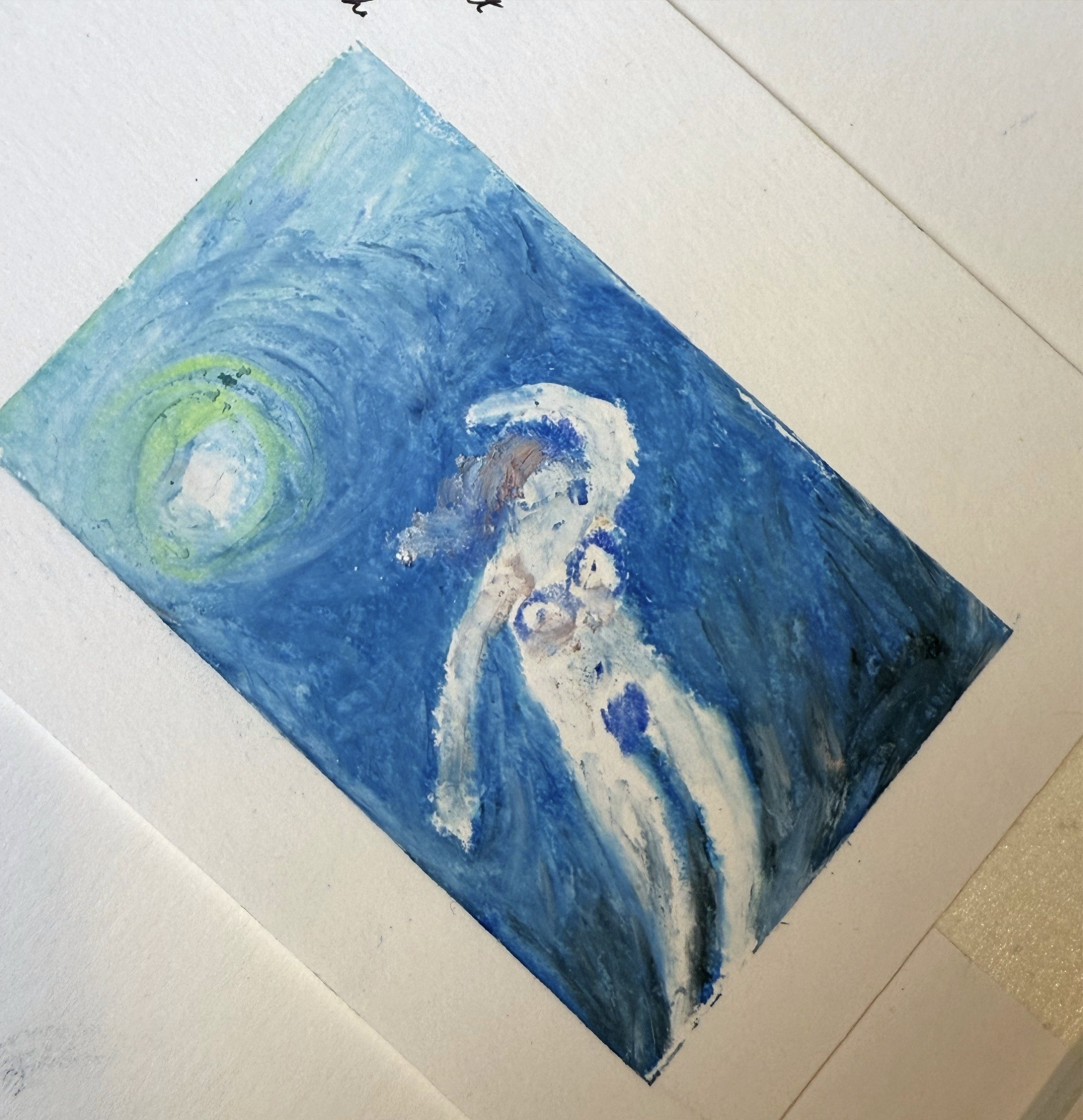
Estudo para ilustração de livro. | Book illustration study.
Por aqui, escreve-se. Muito. Sempre adorei escrever: em criança, sonhei ser jornalista ou escritora durante um dia ou dois, da mesma maneira que queremos ser astronautas ou jedis — sem compromisso, mas com a vontade avassaladora de um ciclone. Quis a vida que não me dedicasse a isso, muito por força de um analfabetismo prático que me deixou arrastar por amores e outras correntes de ar no que à faceta académica da minha vida diz respeito. Pelo menos não me apaixonei por um advogado ou contabilista, não por desprezo pelas profissões, mas por não ter corrido o risco de me passar para o lado oposto do propósito.
Mas, dizia eu: escreve-se, desenha-se, gravam-se vozes para músicas — sim, eu, pessoa patologicamente envergonhada em tudo o que respeite à capacidade musical, incapaz de gerar os mais simples acordes, mesmo a pedido de uma cara-metade na privacidade do lar! — jardina-se, lê-se. Cozinha-se, ainda, sempre. E, pela primeira vez em algum tempo, pinta-se.
Tenho brincado com pastéis de óleo. É um meio que toda a vida me causou espécie — possivelmente por nunca ter tido acesso a um de excelente qualidade — e que usava apenas aqui e ali como complemento de um quadro ou de uma ilustração, mas nunca como material principal. Tenho tido um imenso prazer em sentir as minhas unhas impregnadas de uma pasta impossível de remover, em experienciar um meio que não se deixa dominar, que tem vida e vontade próprias, que se desenvolve de forma pouco ergonómica, nada user-friendly, e que me destrói incontáveis olhos, narizes e bocas por não conseguir calcular ao certo onde vai aterrar — mas que é também responsável por belíssimas nuances e texturas que nunca seriam possíveis de outra forma.
Vou aprendendo a usá-lo como ele quer e me permite: inicialmente, em estudos de sujeitos surreais (que me permitem grandes margens de erro) e, ultimamente, com mais respeito e responsabilidade, em cenas bucólicas desavergonhadamente roubadas a filmes, quadros ou fotografias que tiro a mim mesma em poses que não lembram ao diabo. De qualquer das formas, chego feliz ao fim. Por vezes, o acaso é o mais prolífico artista.
Claro que a frustração impera no processo. O meu cérebro implora pela gratificação imediata de uma cara perfeita, de uma luz radiante, das proporções correctas. Mas a vida não é assim, e a arte, no processo de a imitar, faz do acaso personagem principal. Eu fico triste, irritada, maldisposta, e depois a maré desce e eu respiro em paz, numa profunda reverência ao monstro que criei.
Que bonito é trabalhar com um meio que se está nas tintas para a minha vontade.
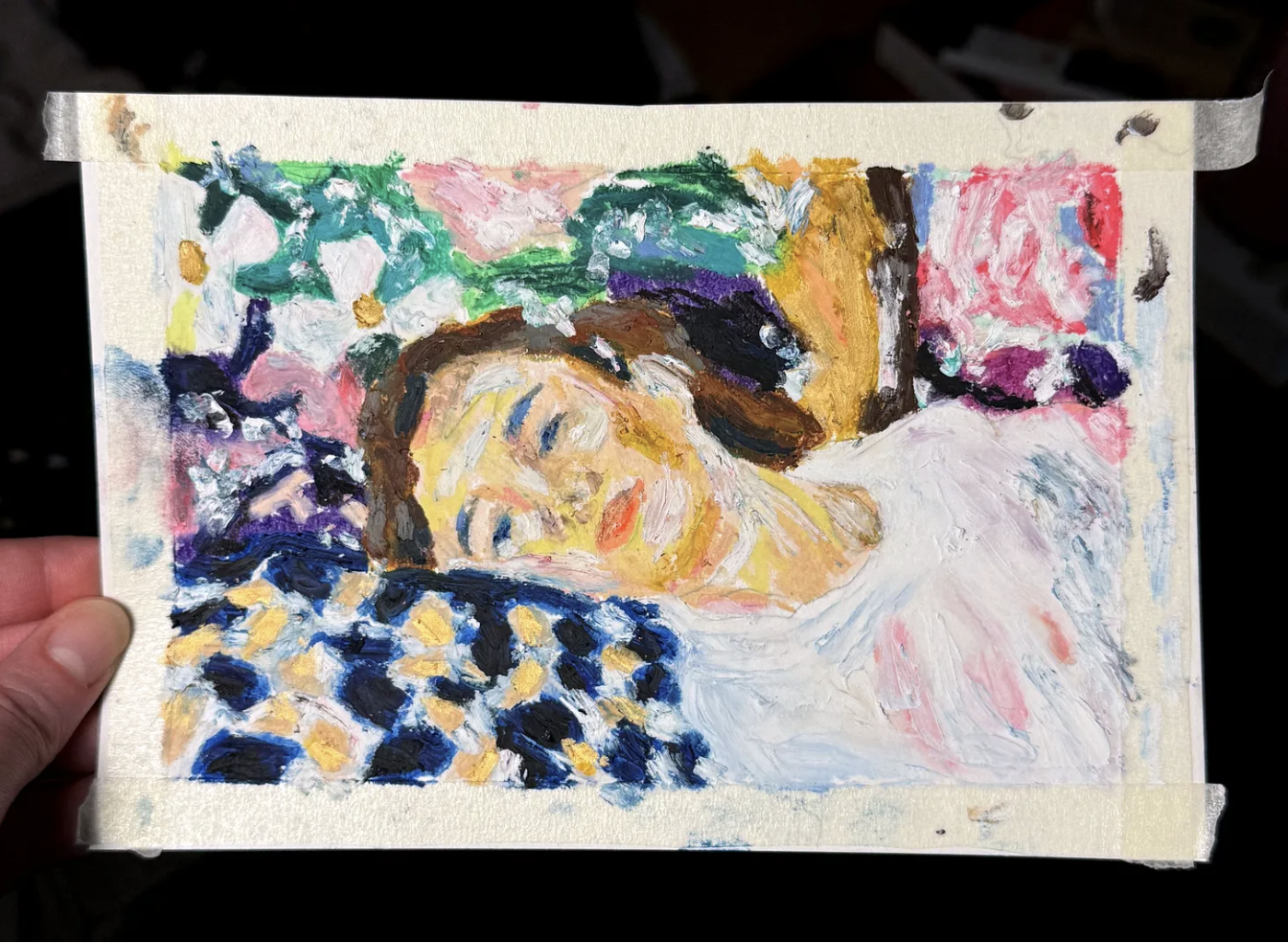
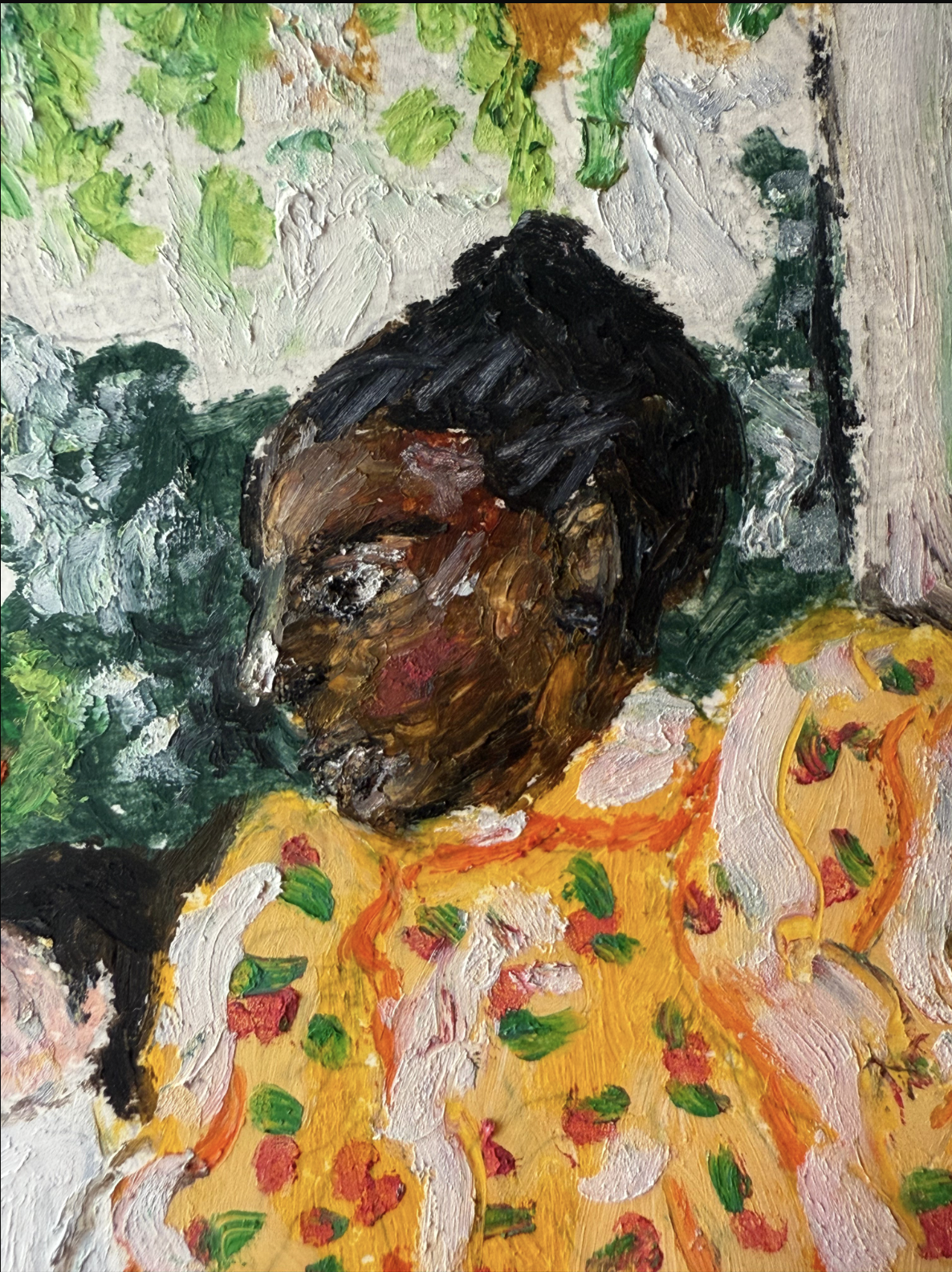
Estudo terrível a partir do maravilhoso quadro Reflection in White, de Hugo Grenville
Awful study based on the wonderful Reflection in White by Hugo Grenville
English Version
Stepping outside your comfort zone builds adaptability and resilience, normalizes failure, and helps the brain evolve and push beyond itself — but it’s just as beneficial as it is slow and difficult.
My anxieties and idiosyncrasies make me overly hesitant to expose myself to new experiences and, for many years, showing vulnerability and accepting mistakes were simply not viable options for me. This is one of the aspects of my personality I work hardest to change, given its stifling and, at times, incapacitating nature.
Over the years, I erased the memory of the joy that comes with being a beginner at something. Starting a hobby, reading about it, gathering and analyzing information, failing when I try to apply it, and starting again — these are good, necessary sensations for growth. Failing is good. It’s healthy to understand where we need to grow, to evolve. It’s part of life.
The ego — despite being a fundamental part of our existence — has a remarkable ability to build a wall between the idea we create of ourselves and the person we actually are. It’s extremely difficult (especially in the eyes of a perfectionist, productivity-driven society) to accept and love ourselves as we are — that is, when we even know who we are. We begin life learning what not to do, what is acceptable, what is expected of us, how to fit the mold, and how to most efficiently suppress our own personality in order to shape ourselves into what society, our friends, our teachers, our family (and now social media, and our imaginary audience) expect us to be.
The result is the erosion of personality, and billions of human beings living on autopilot. Social media (among other things) erase any trace of individuality and turn it into a need for standardization, resentment toward others (and ourselves), main character syndrome, or apathy. We are witnessing the mass production of people who are delighted to generate (or consume, or both) content completely devoid of substance in exchange for more double taps — in other words, validation.
I’m not exempt from this. I belong to a generation that grew up alongside the technological boom and Industry 4.0 — born into a pre-internet-democratization world, and witnessed its explosion. My first contact with social media came during puberty, with the (practically extinct) Myspace, which I had to access through a prehistoric computer shared by the whole family, where, before that, I used to spend time drawing in Paint. Then came MSN, Hi5 — whose “Top” quietly destroyed even the most solid friendships — and the early days of Facebook. I was twenty-one before I got my first smartphone and Wi-Fi at home.
During my (fortunately long-gone) years of inhibiting anxiety, Instagram became an antidote to silence and ruminating thoughts, but since 2020 I’ve only used it as a work tool — though I’ve been thinking about dropping that too. By the end of 2025, I reduced my professional and relatively frequent use of Instagram to sporadic check-ins: replying to messages, posting the occasional piece of work, and nothing more. My phone has been banned from the bedroom and now spends most of its time left to itself, allowing for a much-needed and well-deserved introspection. And I discovered that, after all, I do have free time.
And it’s not just me. Analog is having a moment — and I’m glad. The fewer people willingly hand their minds over to that slow drift into collective decay, the better. I’ll always be grateful for that, as long as it doesn’t fade like trends usually do.
These days, I write. A lot. I have always loved writing: as a child, I wanted to be a journalist or a writer for a day or two, the same way we want to be astronauts or Jedi — no commitment, just that overwhelming, all-consuming kind of enthusiasm. Life had other plans, and I didn’t pursue it, largely due to a kind of practical illiteracy that let me drift, carried by love and other passing currents when it came to the academic side of my life. At least I didn’t fall in love with a lawyer or an accountant— not out of any lack of respect, but because I never quite risked ending up far from who I feel I’m meant to be.
Anyway, I write, I draw, I record voice notes for songs — yes, me, someone pathologically shy when it comes to anything musical, incapable of producing even the simplest chords, even when asked, in the privacy of home — I garden, I read. I cook, always. And, for the first time in a while, I paint.
I’ve been experimenting with oil pastels. It’s a medium that always unsettled me — possibly because I never had access to good-quality ones — and that I only used here and there as a complement to a painting or illustration, never the main act. But there is something deeply satisfying in it: the way it seeps into my nails, the unpredictability of it, the fact that it resists control, that it has a life and a will of its own, that it behaves in a clumsy, far-from-user-friendly way, ruining countless eyes, noses, and mouths because I cannot quite predict where it will land — and yet, it creates textures and nuances that would be impossible otherwise.
I’m learning to work with it on its own terms: first in surreal studies (which allow for wider margins of error), and more recently with greater care, in bucolic scenes shamelessly borrowed from films, paintings, or photographs I take of myself in poses that feel completely absurd. Either way, I end up satisfied. Sometimes, chance is the most prolific artist.
Of course, frustration dominates the process. My brain longs for immediate gratification — a perfect face, radiant light, correct proportions. But life doesn’t work like that, and art, in trying to imitate it, inevitably makes chance its main character. I get frustrated, irritated, restless — and then it softens. The tide recedes, and I can breathe again, in a quiet reverence towards creation.
There is something beautiful about working with a medium that refuses to bend to my will.
Tenebroso estudo de um outro still de Poor Things.
Carolina: 0 — Pastel de Óleo: 1
A very unsuccessful study of a still from Poor Things.
Carolina: 0 — Oil Pastel: 1