

East of Eden
English version available bellow.
(Nota: o texto contém referências ao enredo do livro.)
A dádiva da obra de arte (e, quanto a mim, o mais elevado dom do objecto artístico) é a capacidade de contagiar quem a contempla com uma vontade incontrolável de criar. Inspira, marca, vive em nós e através de nós, num ciclo simbiótico e infinito.
Há, contudo, uma reticência na palavra. Agora que aqui estou, pronta para passar para o papel o que East of Eden me deu, sinto-me congelada, como se escrever não valesse a pena, como se falar sobre o livro o estragasse e lhe retirasse valor. Mas tenho de escrever. Preciso de o fazer para me lembrar, pelo auxílio que proporciona ao meu pensamento, e para o transpor para esta dimensão.
Publicado em 1952, East of Eden é uma saga familiar que acompanha várias gerações das famílias Trask e Hamilton (esta última, a família materna do autor) na viragem do século XIX para o século XX. No seu epicentro estão conceitos como o livre arbítrio e a possibilidade de escolha moral, a hereditariedade, a natureza humana e a eterna batalha entre o bem e o mal.
Corre-me nas veias uma predileção por romances genealógicos — como é o caso dos mágicos A Casa dos Espíritos e Cem Anos de Solidão —, e era quase certo que, somados os factores autor e tema, East of Eden viesse a juntar-se ao pódio. A história tem início com os irmãos Adam e Charles Trask, distintos como água e vinho: Adam é gentil e bondoso, mas frágil; enquanto Charles é dado a repentes coléricos e maldosos, recorrendo à força bruta para descontar no irmão os ciúmes que sente pelo afecto que o pai lhe dedica. Ambos crescem com a figura paterna austera e colérica de Cyrus Trask, cuja proeminente carreira militar está assente em mentiras tão bem construídas e reiteradas que o próprio acaba por acreditar nelas. Adam alista-se no exército e Charles fica para trás, encarregado de cuidar do rancho da família.
Graças à sua persuasão e mitomania, Cyrus obtém a posição de conselheiro em Washington, o que lhe permite acumular uma fortuna considerável, deixada aos filhos em testamento. Charles abraça a herança sem qualquer pudor, enquanto Adam se mostra reticente em aceitar o dinheiro cuja origem considera duvidosa, o que aprofunda o fosso entre ambos. Vivem numa espécie de paz podre, até à noite em que Cathy lhes aparece à porta, semiconsciente e desfigurada por uma tareia brutal infligida pelo seu companheiro. Adam apaixona-se por ela e decide acolhê-la durante a sua convalescença, alheio ao facto de estar a abrir a porta a uma criatura demoníaca, responsável por uma série de crimes hediondos. Talvez por reconhecer algo de si próprio nela, Charles implora a Adam que a expulse de casa. Adam, porém, decide casar com Cathy e abandonar para sempre o rancho.
O casal muda-se para o Vale de Salinas com o propósito de criar o seu próprio paraíso e fundar uma família numa terra mais fértil, recorrendo para isso à fortuna de Cyrus. Adam contrata Lee para trabalhar na casa, e Cathy encontra-se então grávida de gémeos — de Adam ou de Charles, questão que permanece em aberto. O parto dá-se em casa, com a ajuda de Samuel Hamilton, avô de John Steinbeck. Assim que recupera, Cathy abandona o rancho. Antes de partir, aponta uma arma ao marido e dispara quando este tenta detê-la, atingindo-o no ombro. Determinada, dirige-se à cidade, onde se dedica primeiro à prostituição e, mais tarde (após assassinar a dona do bordel em que trabalha) ao lenocínio.
A natureza humana é um assunto recorrentemente debatido ao longo do livro. A propósito da maldade desmedida de pessoas como Cathy, Steinbeck esboça a ideia de um lago do mal que existe dentro de todos nós, cercado por uma vedação que o contém. No entanto, em alguns seres humanos, essa maldade tem força suficiente para destruir as vedações, dando origem a um monstro: uma espécie de mutação que é, ainda assim, nossa parente, e, como tal, passível de compreensão. Esta metáfora também se aplica à morte tenebrosa da mãe de Lee, às mãos de um monstro coletivo que, no rescaldo do seu acto medonho e desumano, procura redenção cuidando do bebé que ficou para trás.
Vem-me à memória a performance Rythm 0, de Marina Abramović, que consistiu na colocação de vários objectos de diferente natureza à disposição do público, que os podia aplicar como bem entendesse no corpo da artista. Uma janela temporal de seis horas, durante as quais Abramović permaneceria imóvel, garantiu a impunidade do público ao longo da duração da performance. As interações começam tímidas e contidas, mas, com o passar do tempo, a situação descontrola-se por completo, e o público começa a apresentar comportamentos progressivamente mais agressivos e invasivos. A artista perde a humanidade, transforma-se gradualmente num objecto e começam, então, as agressões: a roupa é-lhe arrancada do corpo, a sua pele é cortada, o seu sangue bebido. Vários líquidos são derramados sobre si, uma faca é-lhe espetada entre as pernas. Há quem lhe aponte uma arma carregada e coloque o dedo no gatilho. A maldade impera até o relógio chegar ao zero e a artista voltar a ter agência sobre o seu corpo, momento em que o público foge, incapaz de a encarar.
Menos de seis horas foi o tempo necessário para a humanidade desaparecer e a maldade imperar naquela sala.
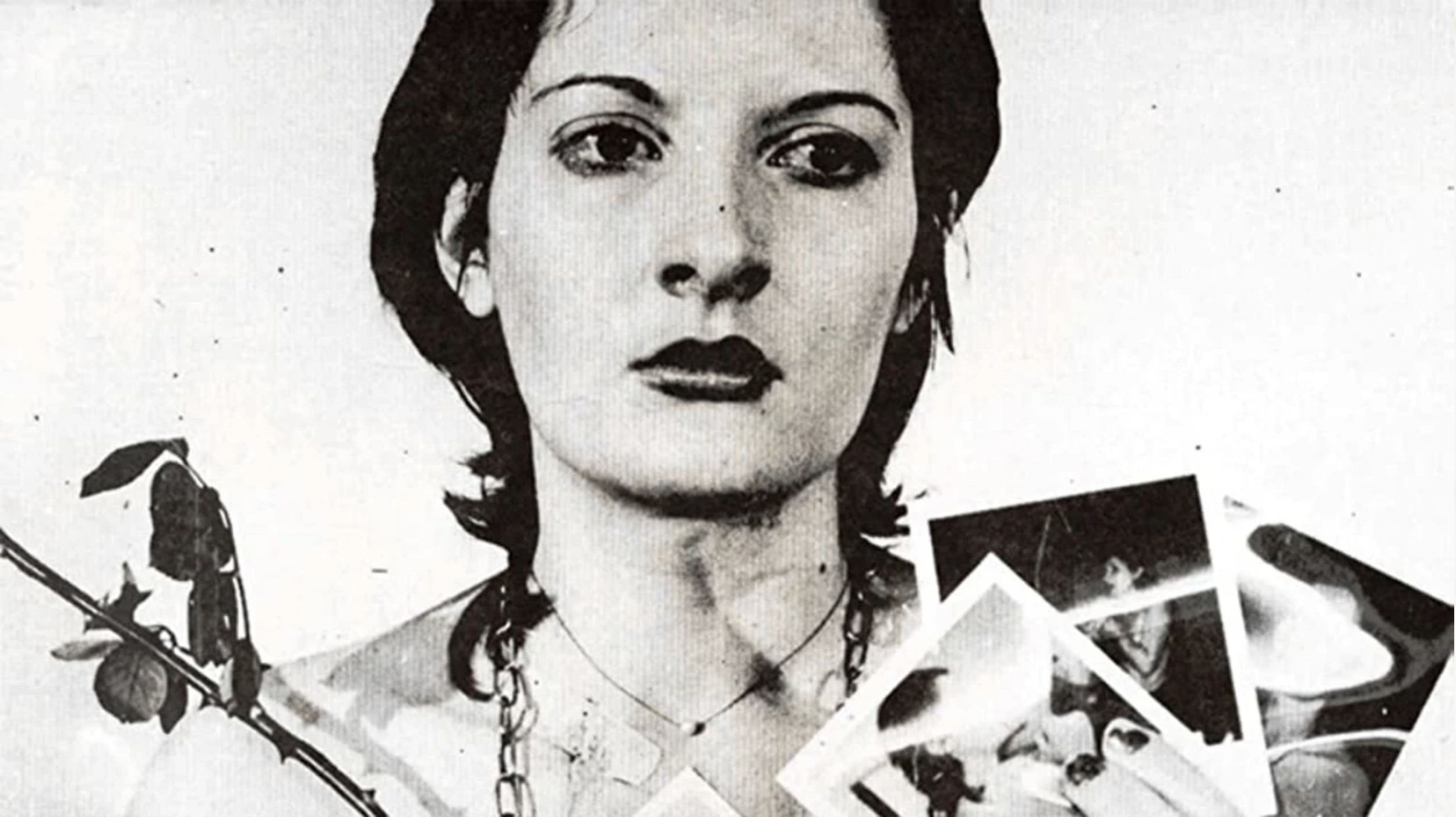
Rhythm 0, Marina Abramović, 1974
Muitas são as questões que se levantam: Haverá, nas vedações que aprisionam os lagos de cada um, pequenas fendas de tamanhos distintos, permitindo a fuga de vários níveis de maldade? Estará essa barreira assente na educação, nas leis, na opinião dos outros ou numa possível punição? Quais são os nossos limites quando a impunidade é certa, ainda que momentaneamente? O que nos impede de despedaçar as barreiras e mergulhar nesse lago de maldade para nunca mais sair?
Cathy, incapaz de sentir amor ou empatia, foge e deixa atrás de si uma destruição que impede o marido de amar os filhos. Assim, Lee dedica a sua vida a Adam e aos gémeos Aaron e Caleb, num exemplo comovente de servidão incondicional, à medida que Adam mergulha numa paralisia emocional que o condena à apatia.
No seguimento de uma conversa entre Adam, Lee e Samuel, Sam acaba por ler em voz alta a história de Caim e Abel, dando início a um debate sobre a natureza humana. A história tem lugar no Génesis — o primeiro livro da bíblia. Caim e Abel são filhos de Adão e Eva: Caim dedica-se à agricultura e Abel ao pastoreio. A dada altura, cada um dos irmãos oferece uma prenda a Deus que, sem motivo aparente, aceita a de Abel e rejeita a de Caim.
Raro é o pai que não tem um filho favorito, ou por quem sente maior afinidade. É uma inevitabilidade da vida que muitos pais escolhem ignorar. Também os irmãos Adam e Charles, e mais tarde Aaron e Caleb, oferecem prendas aos pais, e também estes privilegiam a sua favorita, fazendo com que o filho cuja dádiva é rejeitada se sinta excluído e invejoso. Assim acontece também com Caim, que, colérico e cego de ciúme, acaba por matar o irmão e, quando confrontado com o seu crime, nega a responsabilidade. Como punição, Deus marca-o e envia-o para o desterro para Leste do Paraíso (East of Eden).
Nenhum dos irmãos da história chega a cometer fraticídio, mas, curiosamente, no primeiro par de irmãos é Adam, o mais puro dos dois, que acaba por se exilar, e o seu East of Eden é o Vale de Salinas.
Salinas Valley é o degredo de Adam, mas também de muitas das restantes personagens: é para lá que Cathy foge e é de lá que tem medo de partir, mesmo quando a possibilidade se apresenta, como se estivesse presa por um grilhão invisível. É em Salinas que o maravilhoso Sam passa o fim dos seus dias, e é a Salinas que Lee retorna depois de abandonar o seu sonho de longa data. Todos eles parecem ser atraídos para lá por uma força divina, um destino, uma sina.
O exílio de Adam é interior: ele foge do irmão, do rancho que herda do pai, mas, acima de tudo, da verdade, a passo que o exílio de Cathy é moral. Ela passa os seus últimos dias fechada no seu próprio purgatório: com o corpo a decair, a doença a destruí-la de dor e um medo permanente de que o castelo de cartas que construiu rua e a subterre.
Talvez esteja implícito nas palavras de Steinbeck que todos vivemos no exílio, e a verdadeira questão não seja a expulsão do paraíso em si, mas sim o sentido que damos à nossa vida depois dela.
Lee dedica anos da sua vida ao escrutínio da história de Caim e Abel, inicialmente lida por Sam na versão em inglês. No entanto, é ao estudar o texto hebraico original que se dá conta de uma falha na tradução: uma diferença aparentemente pequena, mas que altera por completo o sentido do texto.
Lee descobre que, no lugar de thou shalt (“deverás”), está escrito timshel, cuja tradução correcta para inglês é thou mayest (“poderás”), o que implica a possibilidade de escolha. É com êxtase que Lee deduz que a ausência de imperativo confere a Caim, e consequentemente ao ser humano, a possibilidade de livre arbítrio, colocando o poder da escolha nas suas mãos. É nas mãos de Caim que Deus deposita a responsabilidade, no seu poder de escolha, e é isto que distingue o ser humano dos restantes seres. Uma única palavra leva-nos do determinismo ao livre-arbítrio, e Caim perde a sua conotação de vilão bíblico. Quem assim o vir, talvez se encontre ainda amarrado à negação do seu próprio lago de maldade.
Através de Caim, Steinbeck humaniza-nos a todos, e à nossa natureza. O ser humano pode escolher praticar o mal ou o bem, mas renegar uma parte de si mesmo só abre mais frinchas no lago.
“If it troubles us it must be that we find the trouble in ourselves”
Mas onde nasce a maldade?
Cathy é um exemplo extremo. Uma mulher perturbadora e sádica, que representa todos os marcadores de psicopatia e maldade pura, racional e propositada. Como todos nós, tem capacidade de escolha, mas opta pela maldade e o pecado porque lhe dão prazer, provando que algum mal nasce da vontade, e não da dor ou do trauma.
Fiéis à genealogia, Aaron e Caleb são descritos na infância como a epítome do bem e do mal, respectivamente. Com o passar dos anos, ao aperceber-se da verdadeira natureza da sua mãe, Caleb agarra-se à possibilidade junguiana de ultrapassar a genética e deposita fé no seu lado bom sem renegar a sua Sombra. Tem consciência do mal dentro de si e tenta aceitá-lo, ao mesmo tempo que procura privilegiar a luz.
É natural que no início não gostemos de Caleb: ele é humano e reflete as nossas fraquezas. Todos nós agimos com as piores motivações de quando em vez, lidando depois com as consequências reais e morais que elas nos trazem. Todos sentimos inveja, rancor e ira, e permitimos que conduzam a ações que gostaríamos de apagar.
Já Aaron, faz o percurso inverso, provando que até da semente da bondade pode nascer o mal. Ao crescer, começa a negar a humanidade das pessoas se elas não forem perfeitas aos seus olhos, e a sua bondade transforma-se num egoísmo que o leva a julgar e ostracizar os que o rodeiam. Perde-se cada vez mais na religião e no fanatismo e passa a viver numa superioridade moral que julga conferir-lhe o direito de controlar a verdade e purgar o mundo à força. Aaron não aceita nada que não a perfeição de um homem totalmente bom, e portanto nunca poderá amar.
“Some men are friends with the whole world in their heart, and there are others that hate themselves and spread their hatred around like butter on hot bread”
John Steinbeck narra a história com uma proficiência que transpõe conceitos ininteligíveis para palavras, espelhando o nosso tempo com uma precisão que me causou fascínio e incómodo em igual medida. East of Eden foi escrito há mais de setenta anos, e ainda assim senti que estava a ler as palavras de um visionário contemporâneo.
O autor reflete, por várias vezes, acerca da produção em massa, concluindo que a evolução industrial e tecnológica acabará mais cedo ou mais tarde por condicionar o pensamento e a criatividade humana, e queixa-se também do facto de a sociedade procurar eliminar o pensamento individual, privilegiando a mentalidade de grupo, de rebanho — ilustrando, assim, dois grandes males do nosso tempo.
Steinbeck defende que uma mente livre é aquilo que nos separa dos animais, opondo-se veementemente a qualquer ideia, religião ou governo que limite ou destrua o indivíduo e a sua singularidade e identidade.
“There’s no springboard to philanthropy like a bad. Conscience”
A narrativa desenrola-se com mestria, permitindo-nos imaginar, escrutinar e tirar conclusões mediante as nossas predisposições. A escrita desperta todos os nossos sentidos: prende-nos, envolve-nos, faz-nos levar as personagens para fora do livro e mantê-las vivas no pensamento. São figuras ricas, inteligentes, carismáticas, boas, más, egoístas e profundamente humanas, e cada uma delas nos representa à sua maneira. East of Eden é um romance profundamente humanista ao afirmar a dignidade humana e a capacidade de escolha moral, mesmo perante o peso do passado e da herança genética. É um colosso, um livro monumental, que celebra a condição humana como um todo, sublinhando que a experiência e a história são cíclicas e se perpetuam de geração em geração.
Parafraseando Steinbeck: nenhuma história tem poder ou poderá durar se não for verdadeira e se não refletir, pelo menos, uma parte de nós.
“Its is one of the triumphs of the human that he can know anything and still not believe it.”
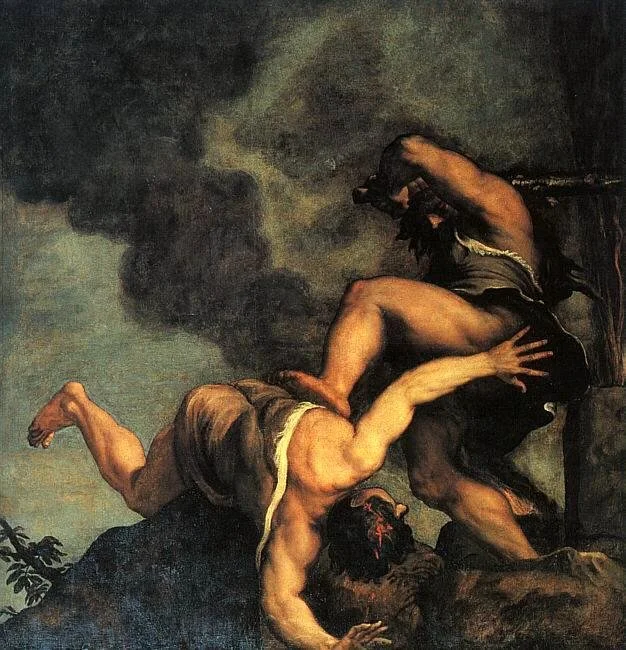
Cain and Abel, Titian, c. 1542–1544
English Version
(Note: this text contains references to the book’s plot.)
The gift of a work of art, and to me its highest virtue, lies in its ability to awaken in us an almost uncontrollable urge to create. It inspires, leaves a mark, and lives on within us and through us, in a kind of endless, symbiotic cycle.
And yet, there is always a hesitation when it comes to putting it into words. Now that I sit here, ready to write about what East of Eden gave me, I feel strangely paralyzed, as though writing might diminish it, as though speaking about the book could somehow take something away from it. Still, I have to try. I need to write, if only to remember, and because writing helps me think. It allows me to bring the experience into this space.
Published in 1952, East of Eden is a family saga that follows several generations of the Trask and Hamilton families, the latter being Steinbeck’s ancestors, around the turn of the twentieth century. At its heart are questions of free will and moral choice, heredity, human nature, and the enduring tension between good and evil.
I have always been drawn to generational novels, like the extraordinary The House of the Spirits and One Hundred Years of Solitude, so it felt almost inevitable that, given both the author and its themes, East of Eden would find its place among them.
The story begins with the brothers Adam and Charles Trask, as different as water and wine. Adam is gentle and kind, but fragile. Charles, on the other hand, is prone to sudden bursts of anger and cruelty, often taking out on his brother the jealousy he feels over their father’s affection. They grow up under the austere and volatile authority of their father, Cyrus Trask, whose distinguished military career is built on lies so carefully constructed that he eventually comes to believe them himself. Adam enlists in the army, while Charles remains behind to tend to the family ranch.
Through persuasion and sheer invention, Cyrus secures a position as an advisor in Washington, accumulating a considerable fortune that he later leaves to his sons. Charles accepts his share without question, while Adam hesitates, uneasy about money whose origins he distrusts. The distance between them only deepens. They live in a fragile, uneasy peace until the night Cathy appears at their door, half-conscious and disfigured after a brutal beating. Adam falls in love with her and takes her in while she recovers, unaware that he is letting something profoundly dangerous into his life. Cathy carries with her a trail of violence, including manipulation, destruction, and even the murder of her own parents. Charles, perhaps recognizing something of himself in her, begs Adam to send her away. Adam refuses. Instead, he marries her and leaves the ranch for good.
They move to the Salinas Valley, hoping to build a life together, to create something resembling a paradise of their own. Adam hires Lee to work in the household, and Cathy is soon revealed to be pregnant with twins, though whether they are Adam’s or Charles’s remains uncertain. The birth takes place at home, and, as soon as she recovers, Cathy leaves. Before going, she shoots Adam in the shoulder when he tries to stop her. She then heads into town, where she first turns to prostitution and later, after murdering the brothel’s owner, takes control of it herself.
Human nature is a thread that runs throughout the novel. In reflecting on people like Cathy, Steinbeck imagines a kind of inner reservoir of evil within each of us. In his metaphor, this darkness is contained by a fence. But in some individuals, the force of that darkness is strong enough to break through, creating something monstrous. And yet, even that monster remains, in some sense, one of us, and therefore something we are compelled to try to understand. This idea echoes in the horrific death of Lee’s mother, at the hands of a collective violence that later seeks redemption by caring for the child left behind.
It brings to mind Rhythm 0, the performance by Marina Abramović, in which a series of objects were placed at the audience’s disposal, to be used on her body in any way they wished. For six hours, she remained completely still, granting them total impunity. At first, the interactions are hesitant, almost gentle. But as time passes, something shifts. The situation spirals. The audience becomes increasingly aggressive, increasingly invasive. Gradually, she ceases to be seen as a person and becomes an object. The violence escalates. Her clothes are cut from her body. Her skin is pierced. Her blood is drank. Liquids are poured over her. A knife is placed between her legs. At one point, someone points a loaded gun to her and places a finger on the trigger. The cruelty continues until the six hours come to an end and she regains agency over her body. At that moment, the audience disperses, unable to face her.
It takes less than six hours for humanity to fall away.
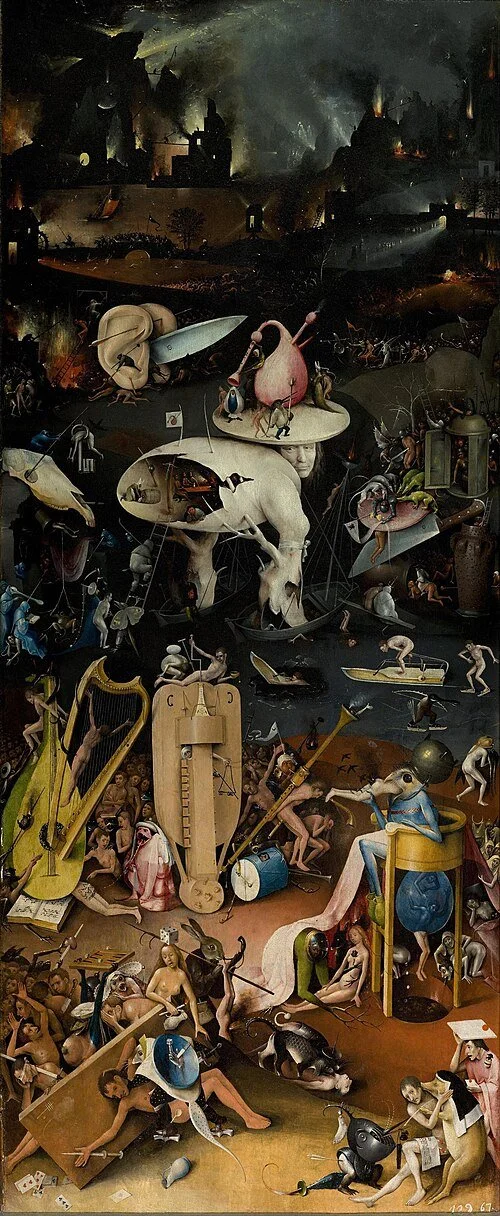
The Garden of Earthly Delights - Hell, Hieronymus Bosch, c. 1450–1516
This raises unsettling questions. Are there cracks in the barriers that contain our inner darkness, allowing different degrees of it to escape? Are those barriers shaped by education, by laws, by the judgement of others, or by the fear of consequences? What are we capable of when we know we will not be held accountable, even for a moment? What stops us from breaking those boundaries entirely and surrendering to that darkness?
Cathy, incapable of love or empathy, leaves behind a devastation that robs Adam of his ability to love his children as he might have. Lee, in contrast, devotes himself to Adam and to the twins, Aaron and Caleb, with a quiet and unwavering loyalty, while Adam sinks into an emotional paralysis that distances him from his sons.
During a conversation between Adam, Lee and Samuel, the story of Cain and Abel is read aloud, opening the way for a reflection on human nature. For those less familiar, the story appears in Genesis, the first book of the Bible. Cain and Abel, the sons of Adam and Eve, offer gifts to God. For reasons that remain unclear, Abel’s offering is accepted, while Cain’s is not.
Few parents are entirely free from favoritism, even if they choose not to acknowledge it. The same dynamic echoes across generations in the novel. Both Adam and Charles, and later Aaron and Caleb, offer gifts, and in each case one is favored over the other, leaving the rejected son feeling diminished and resentful.
Cain, overcome by jealousy, kills his brother and denies responsibility when confronted. As punishment, he is marked by God and sent into exile, east of Eden.
None of the brothers in Steinbeck’s story commit fratricide. Yet, in an interesting inversion, it is Adam, the gentler of the two, who ultimately exiles himself. His own East of Eden becomes the Salinas Valley.
Salinas becomes a place of exile for many of the characters. It is where Cathy flees, and where she remains, unable to leave even when given the chance, as if held there by something invisible. It is where Samuel spends his final years, and where Lee returns after giving up his dream of becoming a bookseller. All of them seem drawn there by something beyond their control.
Adam’s exile is internal. He turns away not only from his brother and his past, but from truth itself. Cathy’s exile, on the other hand, is moral. She ends her life trapped within the confines of what she has made, her body failing, her fear growing, aware that everything she has built may collapse.
Perhaps Steinbeck is suggesting that we all live in some form of exile, and that the real question is not the loss of paradise, but what we choose to do afterwards.
Lee devotes years to studying the story of Cain and Abel. It is only when he turns to the original Hebrew that he notices something crucial. Where the English translation reads “thou shalt”, the Hebrew word timshel means “thou mayest”.
That small shift changes everything.
It transforms the passage from a command into a possibility. It places responsibility, and therefore freedom, in human hands. A single word moves us from determinism to choice.
Through this idea, Steinbeck restores complexity to human nature. We are not bound to good or evil. We carry both within us. Denying that darkness does not erase it. It only weakens the barriers that contain it. The choice remains ours, even if not all will choose well.
“If it troubles us it must be that we find the trouble in ourselves”
So where does evil come from?
Cathy stands as an extreme example. She is deliberate, controlled, and deeply unsettling. Her cruelty is not born of pain alone, but of will. She chooses it, because it gives her something. And in that, too, there is something recognizably human.
Aaron and Caleb, her sons, reflect this duality. As children, they seem to embody opposing forces. Caleb, aware of the darkness within him, tries to live with it rather than deny it. He seeks, imperfectly, to choose otherwise. It is difficult to like him at first, perhaps because he feels too familiar. He reflects our own weaknesses. We all act out of envy, anger, or fear at times, and we all live with the consequences.
Aaron moves in the opposite direction. His goodness hardens. It becomes rigid, exclusionary. He cannot accept imperfection, and in doing so, he loses the ability to truly love.
“Some men are friends with the whole world in their heart, and there are others that hate themselves and spread their hatred around like butter on hot bread”
Steinbeck himself tells this story with remarkable subtlety. He does not impose conclusions. Instead, he leaves space for us to reflect, to question, to recognize ourselves in what is left unsaid.
He returns, more than once, to the idea of mass production, suggesting that industrial and technological progress will, sooner or later, begin to shape and limit human thought and creativity. He also criticizes a society that seems intent on erasing individual thinking, favoring instead a collective, herd mentality, pointing to what feel like two of the defining afflictions of our time.
Steibeck argues that a free mind is what sets human beings apart from animals, and stands firmly against any idea, religion or system of power that seeks to restrict or erase the individual, along with their uniqueness and identity.
“There’s no springboard to philanthropy like a bad. Conscience”
His writing engages the senses. It draws us in and lingers long after the final page. The characters remain with us, not as abstractions, but as something deeply human.
East of Eden is, in the end, a profoundly human novel. It affirms the dignity of choice, even under the weight of inheritance and history. It reminds us that we are shaped by what came before us, but not entirely defined by it.
As Steinbeck suggests, no story endures unless it carries some truth about who we are.
“Its is one of the triumphs of the human that he can know anything and still not believe it.”